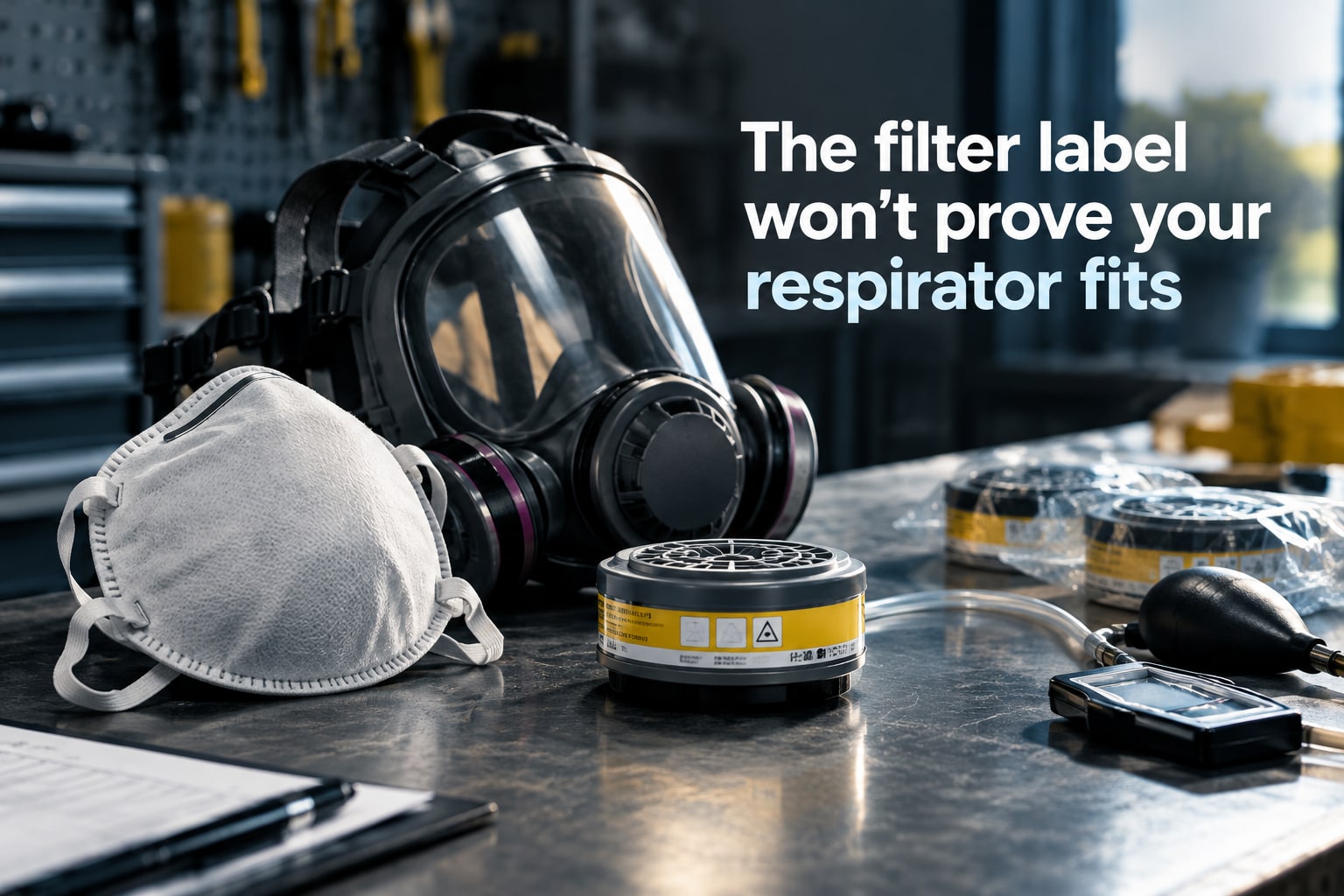
The right choice depends on the contaminant, its concentration and the protection the complete respirator is approved to provide—not on whether a product listing calls it a face mask. You will be able to verify the 3M 9004GV marking, compare it with reusable and full-face options, and specify a respirator that fits the task and your workplace program.
Key takeaways
- Treat 3M 9004GV as a product identification question, not a protection category.
- Verify the model, packaging, standard marking, batch details and intended hazard.
- Match the respirator to dust, aerosols, vapours, chemicals and eye exposure.
- Retain purchase records, certificates, fit-test results and user instructions.
What are you actually comparing: a nose mask, respirator or full-face respirator?
The phrase face mask or 3m nose mask 900 4gv describes a buying search, not a protection category. In practical terms, compare a disposable particulate respirator with a reusable half-face respirator or a full-face respirator; do not assume that a nose clip, ear loops or a moulded bridge creates a workplace face seal.
| Option | What it protects | What it does not establish |
|---|---|---|
| Disposable particulate respirator | Dust, mist and other particles when its marking approves that class | Protection from solvent vapour, toxic gas or oxygen-deficient air |
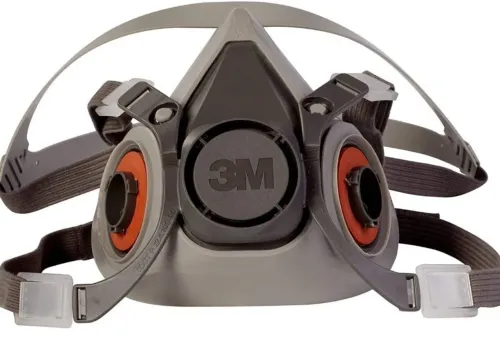
| Reusable half-face respirator | Approved filters or cartridges for the named particle or gas hazard | Eye protection; the face seal still needs a suitable fit |
| Full-face respirator | Approved respiratory protection plus coverage for the eyes and face | Suitability for every chemical; cartridge approval and change-out rules still apply |
| Cloth, surgical or procedure mask | Source control, comfort or limited splash resistance | Tight-fitting industrial respiratory protection |
Treat 3M 9004GV as unidentified until you verify its exact model suffix, package label, jurisdictional approval standard, filter class, manufacturer instructions, lot number and shelf life. A face mask comparison should examine filtration class, inward leakage, breathing resistance and fluid resistance separately.
Choose from the exposure: identify the contaminant and concentration, compare them with the occupational exposure limit, check oxygen level and duration, then select an approved class and fit arrangement. A high filter rating cannot compensate for leakage around your nose, cheeks or chin.
How can you verify the exact 3M 9004GV specification?
Verify the physical respirator, retail package and manufacturer instructions as one identity. The search phrase “3m nose mask 900 4gv” is not a specification and does not prove workplace approval.
Ask for these details before accepting a shipment:
- The exact model marking, including 9004GV, printed on the respirator or package.
- The jurisdictional standard, such as NIOSH 42 CFR Part 84 or China GB 2626, plus the complete approval or certificate number.
- The manufacturer’s instructions stating the filter class, intended contaminant, limitations, fit requirements, valve configuration and shelf life.
- The lot or batch number, packaging photographs and procurement record.
| Evidence | What it confirms | What it does not confirm |
|---|---|---|
| Exact 3M model and suffix | That the item matches the ordered configuration | Protection against every workplace contaminant |
| Standard and approval number | Which authority tested that configuration and under which performance rules | Approval in another country or under another standard |
| Manufacturer instructions | Permitted use, fitting, storage, disposal and valve limitations | That the respirator suits your measured exposure |
| Lot, batch and package label | Traceability and authenticity checks | A successful fit test on your face |
Do not call a 3M 9004GV an N95 unless its package carries a valid NIOSH approval and number. A GB 2626 marking is not NIOSH approval. If the model has an exhalation valve, verify whether unfiltered exhaled air conflicts with your source-control requirement.
Why do certification and fit matter more than the filter label?
A high filter rating cannot compensate for leakage around the nose, cheeks or chin. The face seal determines how much contaminated air reaches you, so a certified workplace respirator mask protects only when its design, approval and fit match the hazard.
Check the respirator itself, not a seller’s description:
- Approval marking: look for the jurisdictional standard and exact identifier, such as a NIOSH TC number or a CE mark with EN 149 classification. Do not assume markings transfer between countries.
- Product identity: record the complete model and suffix, packaging, lot or batch number, manufacturer instructions and approval certificate.
- Fit testing: test the exact model, size and configuration before required use and at least annually under OSHA rules. A successful test for one model does not approve another.
- User seal check: perform it every time you put on a tight-fitting respirator. Facial hair, spectacles or another obstruction across the sealing surface can invalidate the seal.
Ear loops, a nose clip and a molded nose bridge do not prove workplace fit. A respirator that passes a laboratory test can fail on your face if the straps are loose or the mask is the wrong size.
Use conditions decide whether the certification is enough: identify the contaminant, concentration, exposure duration and oxygen level. Particulate respirators do not protect against solvent vapour, toxic gas or oxygen deficiency; select a different approved system when those hazards exist.
Which option matches dust, aerosols, vapour, chemicals or eye hazards?
Choose a particulate respirator for dust and aerosols, a vapour-rated respirator for solvents or gases, and eye protection when the hazard can reach the eyes. A face mask comparison must separate filtration class, face-seal leakage, breathing resistance and splash resistance.
| Option | What it protects against | When it applies |
|---|---|---|
| 9004GV | Particles only if its package shows a valid particulate approval | Choose for dust or aerosols only after confirming the exact standard, class and approval marking; do not call it N95 without a NIOSH approval number |
| V-90-V FFP2S | FFP2-level particulate protection when the marking is genuine | Choose for non-oil dusts, mists and aerosols within the stated concentration limit; it does not protect against solvent vapour or oxygen deficiency |
| 3M 1200 | Particulates only, according to the model’s label and certification | Choose for routine dust or aerosol work when the certified class, fit method and disposal instructions match the task |
| 3M 6200 | Reusable half-face respirator with replaceable cartridges or filters | Choose when you need particulate filters, vapour cartridges or a combination; select the cartridge for the named chemical and fit-test the wearer |
| Full-face respirator | Respiratory protection plus an eye-sealing visor | Choose for chemicals that irritate or damage eyes, splash risk, or higher required protection; use the specified cartridge or supplied-air system |
An ear loop or nose clip does not prove workplace fit. None of these air-purifying options is suitable for oxygen deficiency or an immediately dangerous concentration. The correct workplace respirator mask depends on concentration, exposure time and fit-test results.
What should you specify, check and retain when buying workplace respirators?
A purchase becomes traceable when the order identifies the exact respirator, its approval, and the people who accepted it—not merely “dust masks” or “3M nose masks.” An industrial face mask supplier should be able to match the delivered pack to your purchase order and provide the manufacturer’s instructions.
- Specify the manufacturer, exact model and suffix, size, pack quantity, intended contaminant, and whether the item is disposable or reusable.
- Require the approval marking and named standard printed on the respirator or packaging, such as EN 149 or NIOSH 42 CFR Part 84 where applicable. Do not transfer a claim between countries.
- Check the product label, packaging integrity, lot or batch number, manufacture date, expiry or shelf-life statement, and storage conditions.
- Compare particulate class, inward leakage or fit, breathing resistance, and fluid resistance separately. A surgical mask’s splash resistance does not prove tight-fitting respirator performance.
- Obtain the current manufacturer instructions, limitations, cleaning or disposal method, and replacement interval. Keep the product photograph and unopened-pack label.
- Record the supplier, purchase order, delivery date, batch number, quantity, and receiving inspection. Prestige Industrial Suppliers can help reconcile those details before stock enters issue.
- For tight-fitting respirators, retain medical-evaluation evidence, initial and annual fit-test records, and training records; require a user seal check each time the respirator is donned.
Quarantine packs with missing markings, altered labels, damaged seals, or unmatched batch details. Those gaps prevent you from proving what protection workers actually received after a fit-test failure or exposure.
Related products
 | RESPIRATOR 3M MASK 1200 HALF FACE MASK RESPIRATOR Single cartridge mask Low profile design allows a wide field of vision Soft,elastomeric face seal provides lasting comfort Easy to don/doff strap... View product → |
 | RESPIRATOR 3M MASK 6200 HALF FACE MASK RESPIRATOR The 3M™ reusable half face respirator is an economical, low-maintenance, simple to handle and extremely lightweight. View product → |
Frequently asked questions
What are you comparing when you search for a face mask or 3M nose mask 900 4GV?
You are comparing a disposable particulate respirator with reusable half-face or full-face respirators. Ear loops, a nose clip or a moulded bridge do not prove a workplace face seal.
How can you verify the exact 3M 9004GV specification?
Check the product name, model marking, packaging, standard marking, batch or lot information, instructions and supplier documentation. Do not rely on a shortened search phrase alone.
Why do certification and fit matter more than the filter label?
Certification shows which standard and protection claim the product meets. Fit determines whether contaminated air bypasses the filter around the wearer’s face.
Which respirator matches dust, aerosols, vapour, chemicals or eye hazards?
Choose protection for the identified contaminant and concentration. Particulate respirators address particles, while vapour or chemical hazards require compatible cartridges or another specified control; full-face protection also addresses eye exposure.
What should you specify, check and retain when buying workplace respirators?
Specify the hazard, concentration, required standard, size, model and replacement needs. Check markings, packaging integrity, instructions and fit, then retain certificates, batch details, purchase records and fit-test results.
Related products
 | RESPIRATOR Features & Benefits Protect against fine dust,& Water based mist Net reinforcement for durability Stitched adjustable double elastic One way... View product → |
 | RESPIRATOR Nose mask in center with replaceable or washable filters. High Density Sponge Is Provided For A Comfortable Fit To The Face With Wide Elastic For... View product → |
 | RESPIRATORY PROTECTION Prestige Industrial Suppliers is recognized as one of the best Respiratory Protection dealers, providing a comprehensive range of high-quality... View product → |
 | RESPIRATOR We bring forth our years of experience into providing high quality range of Yellow Nose Masks. View product → |