A black sole does not tell you whether a gumboot protects against impact, chemicals, electrical exposure, or slipping, and a PVC shoe is not automatically an equivalent replacement. You will be able to match boot coverage, toe protection, sole performance, and work-task mobility, then build a purchase specification for the correct alternative.
Key takeaways
- Choose a gumboot for standing water, wash-down spray, mud, sludge or chemical splash.
- Verify protection markings and test documents before calling PVC footwear safety footwear.
- Compare APS T11 Black, APS T7 and APS 551 by construction, fit and intended use.
- Run a documented wear trial on the actual floor, contaminants and work shift.
Choose the footwear shape from the work area, not the colour
Choose the gumboot when the task puts your lower leg in standing water, wash-down spray, mud, sludge, or chemical splash. Its taller shaft provides coverage a low-ankle PVC safety shoe cannot.
Choose the shorter shoe when you climb stairs frequently, walk long distances, work in hot areas, or need precise foot movement; it flexes more easily and feels less enclosing but leaves the ankle and trouser leg exposed.
Treat an Agarson gumboot black sole PVC safety shoe in Bangalore search as a starting point, not a specification. Black identifies colour, not waterproofing, tread, toe protection, or chemical resistance. A plain gumboot may have no protective toe cap, so verify the model rather than assuming “gumboot” means safety footwear.
| Option | Coverage and movement | Better choice |
|---|---|---|
| Agarson gumboot, if its shaft and tests are verified | Greater splash and mud coverage; less flexible for stairs and long walking | Wash-down areas, sludge, standing water, and outdoor wet work |
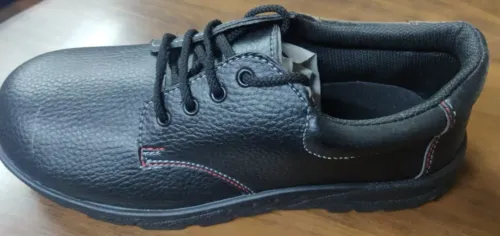
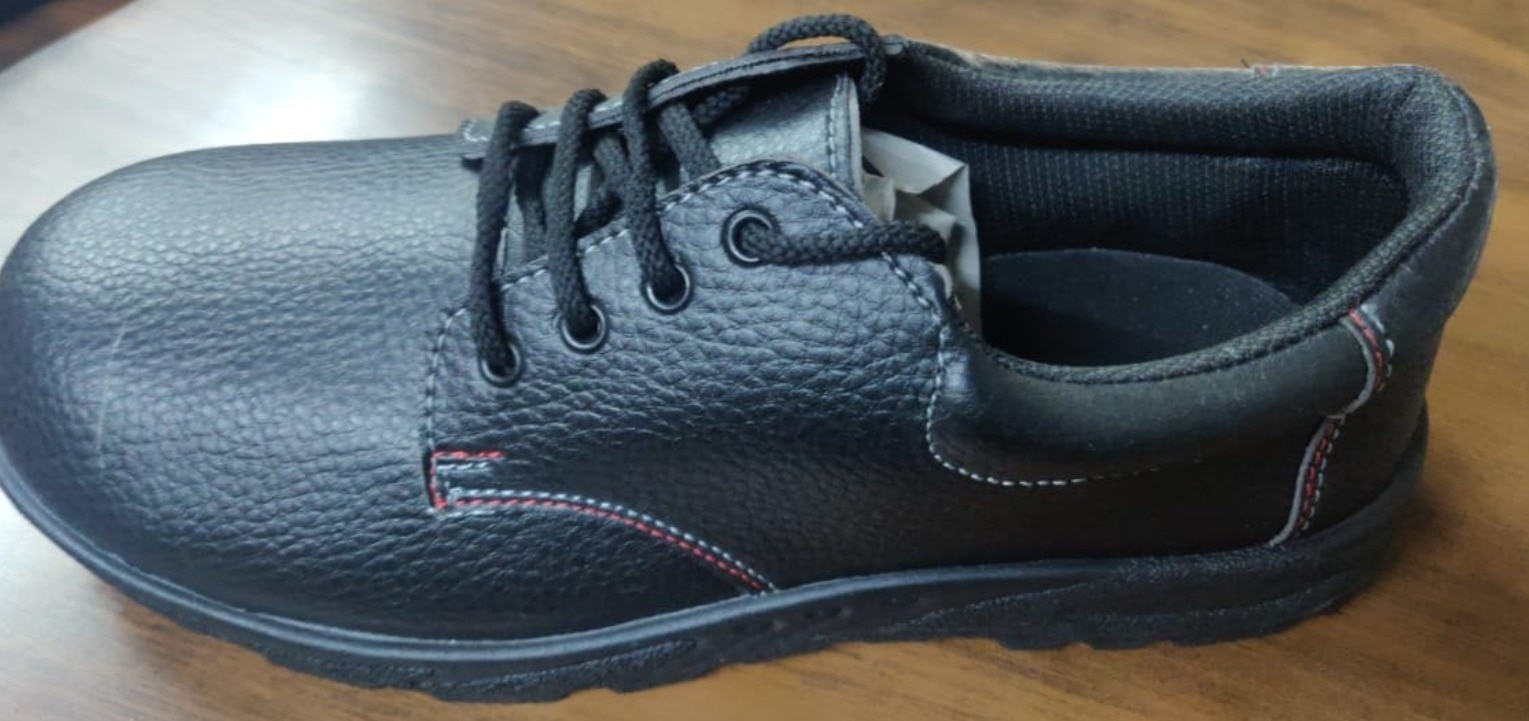
| Low-ankle PVC safety shoe | Easier walking and foot movement; ankle and trouser exposure remain | Dry or lightly wet floors, frequent stair use, and hot work areas |
| Either option | Toe protection and slip performance depend on the tested specification | Select only after checking the actual model documents |
Before replacing the boot, measure the required shaft height and run a short wear trial during the real task. For PVC safety shoes for manufacturing, test walking, stairs, kneeling, and floor grip while wearing the actual trousers and socks.
Reject the shorter shoe if water reaches the ankle or the tread loses grip under the site’s contamination.
Verify the protection claims before treating a product as safety footwear
Approve the footwear only when the marking, certificate, and test evidence match the hazard. “Gumboot,” “safety shoe,” and “black sole” do not prove toe protection; a plain Agarson gumboot may have no steel toe at all.
Request these records before purchase:
- A photograph of the permanent marking showing manufacturer, model, size, batch or serial reference, and the named standard and category. EN ISO 20345 identifies safety footwear with a protective toe cap; EN ISO 20347 covers occupational footwear without the same mandatory toe-cap requirement.
- A declaration of conformity and certificate for the complete footwear assembly, not just the PVC compound or sole.
- Laboratory results for toe impact and compression, puncture resistance, slip performance, and electrical properties where those hazards exist.
- Chemical-resistance results naming your chemical, concentration, contact time, and temperature. Ask for heat and cold operating limits because PVC can harden in cold and deform in excessive heat.
- Manufacturer instructions stating cleaning, inspection, replacement, and every limitation.
| Product description | Evidence to demand | Approval decision |
|---|---|---|
| Plain black-sole gumboot | No toe-cap category or test report | Do not treat it as safety footwear |
| Certified safety gumboot | EN ISO 20345 category plus hazard-specific reports | Consider it for water, sludge, and splash exposure |
| Low-ankle PVC shoe | Shaft height, waterproofing evidence, and the same hazard reports | Do not assume equivalence |
For PVC safety shoes for manufacturing, reject any claim that appears only in a catalogue when the certificate does not cover it. A toe-impact pass does not establish chemical, heat, slip, or electrical protection.
Compare Alkoplus APS T11 Black, APS T7, APS 551, and a gumboot by construction
Choose the gumboot for standing water, wash-down, mud, sludge, or splash above the ankle; choose a low-ankle PVC shoe when stair climbing, walking, ventilation, and precise foot movement matter more. A shorter shaft improves mobility but exposes trousers and ankles to contamination.
| Option | Construction to verify | Practical effect |
|---|---|---|
| Alkoplus APS T11 Black | Confirm low-ankle or ankle-height design, double-density or single-density PVC, and outsole compound | Better mobility if low-cut; double density may balance a firmer wear layer with cushioning |
| Alkoplus APS T7 safety shoe | Request the same construction details; do not treat T7 as a technical replacement for T11 | Compare shaft height, flex, tread, toe protection, and water-test evidence |
| Alkoplus APS 551 | Confirm whether its shaft is higher and whether the sole is single- or double-density | Greater coverage helps splash control; a stiffer, heavier shoe can hinder long walking |
| Gumboot | High shaft, sealed PVC construction, and documented waterproofing | Best coverage for immersion and heavy splash, but less ventilation and ankle mobility |
Lining changes the daily routine. It holds sweat and wash water after PVC itself has shed surface water, so remove insoles, open the shaft, rinse, and dry at room temperature; heat from a radiator or flame can deform PVC. Clean with lukewarm water and mild detergent, then inspect the sole for embedded grit.
Avoid solvents and bleach.
For an alkoplus pvc safety shoe in bangalore, obtain the datasheet for toe-cap rating, penetration, slip, electrical classification, size range, and temperature or chemical limits. The word “black” identifies colour, not protection. Use an actual-task wear trial before replacing a gumboot.
Match PVC footwear to contaminants, temperature, and floor traction
Choose PVC footwear by the contaminant and floor condition: use a gumboot for standing water, wash-down, mud, sludge, or heavy splash, and a low-ankle shoe for frequent stair climbing, long walking, ventilation, and precise foot movement.
An Alkoplus PVC safety shoe in Bangalore is not automatically suitable because its sole is black or its label says “safety.”
Check the worksite against the manufacturer’s evidence before approving PVC safety shoes for manufacturing. Ask for:
- A chemical-compatibility chart covering the named acid, alkali, detergent, solvent, or process chemical, including concentration, temperature, and contact time.
- Separate oil and grease evidence; “oil-resistant” does not prove resistance to cutting fluids, solvents, or every chemical.
- The stated maximum continuous and intermittent heat temperatures, plus the minimum temperature. PVC can soften in heat and lose flexibility in cold.
- Electrical properties and the test standard. Conductive, antistatic, and electrically insulating footwear are different protections.
- A slip-test result for the actual contaminant, such as water, detergent, oil, or grease, on a comparable floor surface.
- Tread depth, tread pattern, and replacement limits. Smooth or worn lugs can defeat a good slip rating.
Confirm that the certificate covers the complete footwear assembly and the claimed properties, not just toe protection. Test the shortlisted pair during a controlled shift; reject it if contamination enters the shaft, the tread packs with sludge, or flexibility and grip deteriorate.
A gumboot’s waterproof coverage may win the hazard assessment, while a shorter shoe may reduce fatigue and heat build-up.
Turn the comparison into a traceable purchase and wear trial
The phrase Agarson Gumboot Black Sole PVC Safety Shoe in Bangalore describes a search, not a specification. Before approving an Alkoplus PVC safety shoe in Bangalore, create one comparison record for the gumboot and each proposed model.
1. Record the task, floor condition, standing water, wash-down chemicals, temperature, walking distance, stairs, shaft height, size, purchase date, batch number, and the worker’s reported hot spots or slipping incidents.
2. Request the product certificate or declaration naming the standard and category, toe-cap material and impact/compression rating, penetration-resistance result, slip test, electrical classification, waterproofing evidence, and stated chemical and temperature limits. EN ISO 20345 and EN ISO 20347 do not mean the same thing.
3. Request the same documents for Alkoplus APS T11 Black and Alkoplus APS T7 safety shoe. Do not treat a model number, black colour, or the word “PVC” as proof of equivalent protection.
4. Fit-test both feet with the socks worn at work. Check heel lift, toe clearance, ankle pressure, sole flexing, stair movement, and whether trouser legs remain inside the opening during bending.
5. Run a supervised trial across representative walking, climbing, wash-down, and standing tasks for one to three shifts. Record water entry, splash exposure, traction, fatigue, sole damage, and cleaning or drying time; stop immediately after any leak or loss of grip.
Prestige Industrial Suppliers can place the batch and document details beside the trial notes, giving you an auditable reason to retain the gumboot or approve the replacement.
Related products
 | FOOT PROTECTION ALKOPLUS PVC SAFETY SHOE APS T11 Brown Design: Low Ankle Upper: Black Synthetic Leather Outsole: Double Density Polyvinyl Chloride (PVC) Lining : Red Air Mesh Fabric padded with soft Foam... View product → |
 | FOOT PROTECTION ALKOPLUS PVC SAFETY SHOE APS T11 Black Design: Low Ankle Upper: Black Synthetic Leather Outsole: Double Density Polyvinyl Chloride (PVC) Lining : Red Air Mesh Fabric padded with soft Foam... View product → |
Frequently asked questions
When is a gumboot better than a PVC safety shoe?
Choose a gumboot when the task involves standing water, wash-down spray, mud, sludge or chemical splash. Its taller shaft protects more of the lower leg than a low-ankle shoe.
Are all PVC shoes safety footwear?
No. Verify the product’s protection claims, markings and supporting test documents before relying on it for impact, compression, penetration or other hazards.
How should you compare Alkoplus APS T11 Black, APS T7, APS 551 and a gumboot?
Compare their construction, shaft height, fit, sole pattern, protection claims and suitability for the contaminants and floor conditions at your site.
What should you check during a PVC footwear wear trial?
Use the actual work area and shift conditions. Record fit, water entry, chemical exposure, sole traction, fatigue, damage and whether workers follow the required wearing practice.
Related products
 | FOOT PROTECTION ALKOPLUS PVC SAFETY SHOE APS 551 Design: Low Ankle Upper: Black Synthetic Leather Outsole: Single Density Polyvinyl Chloride (PVC) Linining: Black Polyester Fabric padded with soft... View product → |
 | FOOT PROTECTION ALKOPLUS PVC SAFETY SHOE APS T7 Design: High Ankle Upper: Black Synthetic Leather Outsole: Double Density Polyvinyl Chloride (PVC) Lining: Brown Polyester Fabric padded with soft... View product → |
 | FOOT PROTECTION ALKOPLUS PU SAFETY SHOE APS 1188 Design: High Ankle Upper: Black Leather in Apollo Print Toe Cap:: EN 12568:2010 approved 200J Steel toe cap Outsole: Single Density Polyurethane (PU)... View product → |
 | FOOT PROTECTION ALKOPLUS PU SAFETY SHOE APS 2100 Design : Low Ankle Upper : Black Leather in Barton Print Toe Cap : EN 12568:2010 approved 200J Steel toe cap Outsole : Double Density Polyurethane... View product → |